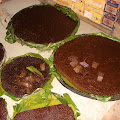
Did Someone say Kulfi?


First of all what is Kulfi Ice cream?


Kulfi is a traditional Indian ice cream minus the eggs and cream. So if you are allergic to those two things, Kulfi can be a good alternative. This recipe comes from a book "Indian Food Made Easy" by Anjum Anand. Enjoy!


Image courtesy of Sodahead.com


Items marked in orange are available at the store.
Kulfi - 4 Servings

Ingredients:

4 cups Whole Milk
2 tbsp Ground Almonds
1 tbsp Rice Flour
5-6 tbsp Sugar (or to taste)
1/3-1/2 tsp Green Cardamom powder (or to taste)
2 tbsp pistachios
2 tbsp slivered almonds

1. Heat the milk in a wide heavy-based pan over a low heat and bring to a boil. Then lower the heat and cook gently stirring often.
2. Place the ground almonds and rice flour in a small cup. Stir in the some warm milk slowly to make a paste.
3. Stir mixture back into the pan and add sugar.
4. Continue to cook gently, stirring often, until the milk reduce to half. (This takes about an hour.)
5. Stir in cardamom powder to taste and let it cool completely.
6. Put into four kulfi molds (Styrofoam cups or any other deep mold is acceptable)
7. Freeze for 5-6 hours. (After two hours, you may take it our and give it a good whisk to break up any ice crystals.
8. When ready, just take molds out of the freezer 20 minutes before serving. You can dip mold briefly in warm water to loosen the ice cream for easy removal. Turn it out onto serving plates and sprinkle generously with slivered almonds and pistachios.

Comments

Popular posts from this blog

Austin's New Hangout for the Filipino Foodie

We moved to Austin, Texas! and have been searching for new places to find Authentic Filipino food near our house. So we found a couple places and went on a foodie adventure. Kapatad Kitchen and Cafe popped up in our search. So off we went to try it out.  Location:  3742 Far W Blvd Suite 113, Austin, TX 78731 Hours:  Closed on Mondays Tuesdays 4:30 PM - 8:00 PM Wednesday-Sunday 11AM - 2:30 PM & 4:30 PM-8:00 PM Phone number:  512-338-6003 You know the saying, "First impression is the last impression". Well here is our first impression! 1. Entry: You are greeted with a welcoming smile by the staff. 2. Decor: It's simple but has a culturally sophisticated feel when you sit down. There are framed photos presenting the Philippine culture all over the wall. 3. Food: First dishes we tried were sisig, Lechon kawali, and dinuguan (pork blood pudding). All I can say is, Yummy in my tummy! I haven't had authentic tasting sisig in a long time! Portions are significant and...

Cooking Vietnamese Pho with Chef Quang Le

Cooking with Chef Quang Le Researching food and spices is a part of our family's daily routine since we ventured into the food industry. Learning about the different components of food makes us appreciate every dish, snack, and drink that we consume. We take every opportunity that we can to continue learning about the flavors of the world. This weekend, I organized a class with a local Vietnamese chef who loves to entertain and educate people through food. Chef Quang Le, co-owner of Clay Pot in Waco Texas, had agreed to teach a class on how to cook traditional Vietnamese Pho.  The class is sponsored by the Association of Asian-American Women in San Angelo, Texas. It was such a refreshing class complete with food history, health benefits, recipe book, and entertainment.  So What is Vietnamese Pho Soup? Vietnamese Pho Soup is considered the national dish of Vietnam. It can be seen as a mirror that reflects the heritage of the Vietnamese people and their w...

Shirataki Noodles

 In the last few months, we've been getting many requests for Shirataki ( しらたき ) noodles. Also known as Miracle Noodles. Thanks to Dr. Oz Show and our local newspaper , many consumers are now widely aware of the benefits this miracle noodle can provide as a carb substitute. Shirataki are low carb, low calorie, low fat, high soluble fiber, and gluten-free noodles made from konjac yam or elephant yams. These Asian yams are also called "Devil's Tongue" Yams and the word "shirataki" means "white waterfall", which describes the translucent appearance of the noodles. Shirataki have little to no flavors, they absorb the flavor of the sauce or soup that you cook them into. You can find these noodles in most Asian grocery stores and some health stores. There are the traditional shirataki and konnyaku and there are tofu shirataki noodles. Tofu Shirataki are soy base and requires refrigeration before its open therefore it has a shorter shelf life t...